
Professional Deck Oven Manufacturer for Commercial Bakeries
In the world of commercial baking and high-volume food service, the equipment you choose directly shapes the consistency, texture, and overall quality of every product that leaves your kitchen. A Deck Oven stands as the cornerstone of artisan bakeries, pizzerias, and restaurants that refuse to compromise on crust perfection and even heat distribution. Unlike convection ovens that rely on fans to circulate hot air, a deck oven uses radiant heat from both the top and the bottom, often with the option to inject steam, creating the ideal environment for bread with a crackling crust, pizzas with a perfectly charred undercarriage, and delicate pastries that rise evenly. The solid stone or steel decks store and transfer heat directly to the baking surface, a method that mirrors traditional brick ovens and gives bakers unparalleled control over the final product. For operations that want to scale without losing the handmade quality that sets them apart, understanding the engineering behind a deck oven becomes a critical step in making a smart investment. SYBO has engineered a range of commercial deck ovens that bring together precision temperature management, robust stainless steel construction, and user-friendly controls to meet the demands of busy kitchens. The following detailed breakdown covers technical specifications, operational benefits, and answers to the most common questions we receive from professional bakers and chefs evaluating deck oven options.
Core Technical Specifications of SYBO Commercial Deck Ovens
SYBO commercial deck ovens are built on a philosophy of uniform heat retention and durability under continuous use. Each model features independently controlled top and bottom heating elements, allowing operators to fine-tune the temperature for specific products. The baking chamber is insulated with high-density rock wool, which reduces heat loss and keeps the exterior cooler, improving energy efficiency and kitchen comfort. The deck surface itself is made from food-grade cordierite stone or thick steel plate, materials chosen for their thermal mass and ability to recover heat quickly after loading. Temperature range spans from room temperature up to 500°C (932°F), covering everything from slow-fermented sourdough to high-heat Neapolitan-style pizza. The control panel integrates digital temperature displays with manual knobs for setting adjustments, giving a tactile experience combined with precise readouts. An integrated steam system, available on select models, releases a burst of moisture into the chamber without opening the door, preserving oven spring and crust development. The door mechanism incorporates a heavy-duty hinge and heat-resistant glass window, enabling visual monitoring without heat disruption. Internal lighting ensures visibility across all deck levels during production. These machines are designed for 220-240V three-phase electrical supply as standard, with customization options available for different regional voltages. Dimensions vary by deck capacity, with single-deck, double-deck, and triple-deck configurations to match production volume.
Key Product Parameters in List Format
- Heating Technology: Independent top and bottom electric heating elements with separate thermostatic controls per deck
- Deck Material: Cordierite refractory stone (standard) or stainless steel plate (custom), thickness 20mm for superior heat retention
- Temperature Range: 0-500°C per deck, adjustable in 1°C increments via digital controller
- Insulation: Triple-layer high-density rock wool, thickness 80mm, minimizing external surface temperature rise
- Steam System: High-pressure steam generator with dedicated water inlet and spray nozzle, steam volume adjustable via control panel
- Chamber Interior: Food-grade stainless steel 304, with removable crumb trays and rounded corners for easy cleaning
- Door Design: Double-layered tempered glass with heat-reflective coating, spring-balanced hinge for smooth operation
- Electrical Requirements: 380V/50Hz three-phase, power rating 6kW per deck (single deck), 12kW (double deck), 18kW (triple deck)
- External Construction: Full stainless steel 430 body with brushed finish, corrosion-resistant and easy to sanitize
- Safety Features: Overheat automatic cutoff, door sensor that disengages heating when opened, ground fault protection
- Dimensions (Single Deck): Width 1400mm x Depth 1100mm x Height 650mm, net weight 180kg
- Dimensions (Double Deck): Width 1400mm x Depth 1100mm x Height 1200mm, net weight 320kg
- Dimensions (Triple Deck): Width 1400mm x Depth 1100mm x Height 1750mm, net weight 460kg
- Baking Area per Deck: 600mm x 900mm, accommodating up to six standard baguettes or four 12-inch pizzas simultaneously
- Control Interface: LED digital temperature display, manual rotary knobs for top heat, bottom heat, and steam timer
- Lighting: Halogen internal lights per deck, 25W each, switch-controlled for energy savings
- Warranty: 2-year comprehensive coverage on parts and labor, 5-year warranty on heating elements
Comparative Specification Table for SYBO Deck Oven Models
| Parameter | SYBO-SD-1 (Single Deck) | SYBO-DD-2 (Double Deck) | SYBO-TD-3 (Triple Deck) |
|---|---|---|---|
| Number of Baking Decks | 1 | 2 | 3 |
| Total Baking Area | 0.54 m² | 1.08 m² | 1.62 m² |
| Power Rating | 6 kW | 12 kW | 18 kW |
| Electrical Supply | 380V / 3PH / 50Hz | 380V / 3PH / 50Hz | 380V / 3PH / 50Hz |
| Temperature Range per Deck | 0-500°C | 0-500°C | 0-500°C |
| Deck Material | Cordierite Stone | Cordierite Stone | Cordierite Stone |
| Steam Injection | Optional Add-on | Standard Integrated | Standard Integrated |
| Internal Lighting | Yes (2 bulbs) | Yes (4 bulbs) | Yes (6 bulbs) |
| External Dimensions (W x D x H) | 1400 x 1100 x 650 mm | 1400 x 1100 x 1200 mm | 1400 x 1100 x 1750 mm |
| Net Weight | 180 kg | 320 kg | 460 kg |
| Number of Independent Thermostats | 2 (top, bottom) | 4 (top/bottom per deck) | 6 (top/bottom per deck) |
| Door Glass Layers | Double-layered tempered | Double-layered tempered | Double-layered tempered |
| Crumb Tray Included | Yes, removable | Yes, removable per deck | Yes, removable per deck |
| External Body Finish | Brushed stainless steel | Brushed stainless steel | Brushed stainless steel |
| Noise Level | ≤55 dB | ≤58 dB | ≤60 dB |
| Certifications | CE, RoHS, ISO 9001 | CE, RoHS, ISO 9001 | CE, RoHS, ISO 9001 |
Practical Operational Characteristics and Performance Details
The cordierite stone deck material deserves special attention because of how it behaves during a production cycle. Cordierite has a low thermal expansion coefficient, meaning it resists cracking even when subjected to rapid temperature changes from loading cold dough onto a hot surface. The stone absorbs moisture from the dough base immediately upon contact, which promotes a crisp bottom crust without burning. SYBO sources deck stones that are kiln-fired at high temperatures to ensure density and uniformity. Each stone slab measures 20mm in thickness, a dimension that balances sufficient thermal mass with manageable preheat times. In a typical single-deck unit, preheating from ambient to 250°C takes approximately 25 minutes, while reaching the maximum 500°C requires around 45 minutes. Temperature recovery after loading a full deck of bread or pizza is swift, usually within 3 to 5 minutes, due to the responsive heating elements embedded beneath and above the chamber. The top elements radiate heat downward evenly across the product, while the bottom elements conduct heat through the stone. This dual-source system eliminates the need to rotate pans during baking, a significant workflow advantage during peak hours. The steam function operates via a pump that injects atomized water into the hot chamber, creating an instant burst of steam that gelatinizes the starch on the dough surface, leading to a glossy, crisp crust. The steam volume can be set between 100ml and 300ml per injection, controlled by a timer dial on the front panel. Bakers working with high-hydration doughs for artisan loaves will find the steam control essential for achieving the open crumb structure and ear formation on scored bread. The door glass remains clear throughout the bake thanks to a heat-reflective coating that prevents condensation buildup, so visual checks are possible without heat loss. SYBO deck ovens also include a venting damper at the top rear of each chamber, which can be manually adjusted to release excess moisture or smoke when baking items like roasted meats or vegetables alongside bread products. The independent controls per deck mean you can bake baguettes at 230°C on the top deck while roasting tomatoes at 180°C on the bottom deck simultaneously, maximizing throughput without flavor crossover. Maintenance is straightforward: removable side panels provide access to heating elements for replacement, and the stainless steel interior wipes clean with standard degreasers. The crumb tray slides out from the front, and accumulated flour or debris can be emptied between shifts without tools. Power consumption in real-world operation averages 15% lower than comparable models from competitors, a result of the insulation thickness and the precision of the thermostatic controls that prevent overshooting set temperatures. Noise levels remain low throughout operation because there are no convection fans; the only audible sound is the occasional click of the contactor cycling and the gentle hiss of the steam injection. For bakeries with open kitchen concepts, this quiet operation enhances the customer experience while keeping the focus on the sights and smells of baking.
Common Questions About Commercial Deck Ovens
What types of products can I bake in a deck oven?
A deck oven excels at products that require a crisp bottom crust and a moist interior, making it the top choice for artisan bread, baguettes, ciabatta, sourdough boules, focaccia, Neapolitan and New York-style pizzas, croissants, Danish pastries, pies, tarts, and even roasted meats and vegetables. The direct contact with the stone deck mimics a traditional hearth, giving breads a distinct oven spring and ears on scored loaves. The combination of top and bottom heat control allows for versatile cooking beyond baking—think casseroles, gratins, and slow-roasted dishes that benefit from steady radiant heat. Pastry chefs value the gentle, even heat that prevents delicate laminated doughs from burning while achieving full rise. Pizzerias rely on the high heat capability to produce leopard-spotted char on thin-crust pizzas in under 90 seconds. The steam injection extends the range further by enabling soft rolls, pretzels, and bagels with shiny crusts.
How does a deck oven differ from a convection oven in a commercial kitchen?
The fundamental difference lies in how heat reaches the food. A convection oven uses fans to blow hot air around the chamber, which cooks food quickly and evenly but also dries out the surface, making it less suitable for breads that need that initial burst of humidity to open up the crumb. A deck oven relies on radiant heat from above and conductive heat from below, with no moving air inside, so the natural moisture of the dough stays in the baking chamber longer. This produces a thicker, crunchier crust and a chewier interior. Convection ovens are versatile and work well for cookies, muffins, and roasted items, but they cannot replicate the hearth-baked character that a deck oven delivers. Another key difference is operational: a deck oven requires bakers to load and unload products manually using peels or trays, which builds skill and consistency, while convection ovens typically use rolling racks. Deck ovens also recover temperature faster after loading because of the thermal mass in the stone, whereas convection ovens can drop significantly when the door opens and the fan kicks back in. For bakeries that market artisan quality, the deck oven is the definitive tool that aligns with traditional methods.
How long does it take to preheat a SYBO deck oven, and how do I maintain temperature consistency during a bake day?
A SYBO single-deck oven reaches 250°C from cold in about 25 minutes, and a full 500°C in roughly 45 minutes. Double and triple deck models require slightly longer due to the increased mass, usually adding 5 to 10 minutes per additional deck. Once at temperature, the digital thermostat maintains the set point within a ±3°C band, which is tight enough to ensure batch-to-batch consistency. To maintain stability during a busy day, load the oven quickly and minimize door opening time. The stone deck holds heat so effectively that a full load of cold dough typically drops the deck surface temperature by only 10-15°C, which recovers within 3 to 5 minutes. Many bakers set the bottom heat slightly higher than the top heat for bread—around 10-20°C difference—to compensate for the heat drawn out by the dough itself. The independent controls per deck eliminate interference between chambers, so opening the bottom deck door has no impact on the top deck temperature. Regular calibration with an infrared thermometer once a month ensures the digital display matches actual deck surface temperature, a quick check that SYBO service technicians can guide you through.
What maintenance is required for a commercial deck oven, and how do I clean the stone deck?
Daily maintenance involves brushing off loose debris from the stone deck with a stiff wire brush once it has cooled slightly, typically at the end of the day while still warm. Never use water or chemical cleaners directly on the stone; the porous material will absorb them and release unpleasant odors or flavors during subsequent bakes. For stubborn carbon deposits, heat the oven to maximum temperature for 30 minutes to carbonize residue, then brush it away. Weekly, remove and empty the crumb trays, and wipe down the stainless steel interior walls with a food-safe degreaser and damp cloth. Monthly, inspect the door gaskets for wear and tightness—a loose gasket leaks heat and steam, reducing efficiency. The heating elements should be visually checked quarterly for signs of blistering or damage, though SYBO elements have a 5-year warranty and rarely fail under normal use. Annually, have a certified electrician check the wiring and contactors, as the high current draw can loosen connections over time. The steam system requires periodic descaling if you use hard water; run a descaling solution through the pump and nozzle every six months to prevent clogs. SYBO provides a detailed maintenance manual with each unit, and their support team offers video call walkthroughs for any troubleshooting.
Can I install a SYBO deck oven in a small bakery or a food truck?
Space and electrical requirements are the main constraints. The single-deck SYBO-SD-1 has a footprint of 1400mm x 1100mm, which fits into most commercial kitchens with a standard door width of at least 900mm for delivery access. It requires a 380V three-phase electrical supply, which is standard in commercial buildings but may need a step-up transformer or generator if you operate in a mobile setting or a location with single-phase service. The net weight of 180kg for a single deck means a reinforced floor or countertop is necessary; it is not suitable for a standard residential kitchen. For food trucks, a double-deck or triple-deck configuration is usually too heavy and tall, but the single-deck model can work if the truck is built with a heavy-duty chassis and the oven is positioned over the axle for weight distribution. Ventilation is another factor: although deck ovens are not direct-vented like some convection models, they still produce heat and occasional steam that require a proper exhaust hood or at minimum a high-output extraction fan. SYBO can provide detailed installation drawings and site preparation guidelines before shipping to ensure your space is ready.
How does the steam system work, and do I really need it for my baking?
The SYBO steam system consists of a water reservoir, a pump, and a spray nozzle positioned at the back of the baking chamber. When you activate steam via the front panel timer, the pump forces a measured amount of water through the nozzle, which atomizes it into a fine mist that instantly turns to steam when it contacts the hot chamber surfaces. This creates a humid environment for the first few minutes of baking, which keeps the dough surface flexible and allows maximum oven spring—the rapid expansion that gives bread its open crumb and score lines. Without steam, the crust sets too early, restricting rise and resulting in a denser loaf. For crust characteristics, steam also gelatinizes surface starches, which later caramelize into a shiny, crisp crust. If you bake lean doughs like baguettes, ciabatta, or sourdough, steam is essential. For enriched doughs like brioche or for items like cookies, you simply skip the steam. The system is optional on some SYBO models and standard on others, but it can always be added later as a retrofit kit. The water connection is a simple 1/4-inch line that can tie into an under-counter filtration system, ensuring mineral-free water for consistent spray and longer component life.
Selecting the Right Deck Oven Configuration for Different Production Volumes
Production volume and menu diversity are the primary factors when choosing between single, double, and triple deck SYBO ovens. A single-deck unit provides 0.54 square meters of baking area, which translates to roughly 6 baguettes or 4 large pizzas per bake. For a small cafe producing 50-100 bread items daily, this capacity works well when combined with staged baking throughout the morning. The footprint is compact, and the lower power draw of 6kW keeps electricity costs manageable. A double-deck oven doubles the capacity and introduces the possibility of baking different products at different temperatures simultaneously—for example, artisan loaves on the top deck at 240°C and pastries on the bottom deck at 180°C. This configuration suits bakeries with broader menus that produce 150-300 units per day. The steam system shared across both decks adds flexibility, though steam can only be injected into one deck at a time if they operate at different temperatures. The triple-deck oven is built for high-volume wholesale bakeries, busy restaurant groups, and supermarket in-store bakeries that need to output 400-600 items across a shift. The triple independent temperature zones mean three distinct product types can run concurrently, and the thermal stability across all three decks stays consistent because each has its own heating circuit and insulation. Operational workflow benefits from having one deck dedicated to high-heat pizza, one to bread, and one to roasting or pastry, eliminating the need to rotate batches or compromise on temperature. All three SYBO configurations share the same deck depth and width, so baking sheets, peels, and trays are standardized across the line. When planning kitchen layout, account for at least 200mm clearance on the sides and 500mm at the back for ventilation and service access. The height of a triple-deck unit requires a ceiling clearance of at least 2 meters, and the top deck should be at a comfortable working height—SYBO provides optional stainless steel stands that raise the bottom deck to ergonomic levels, reducing bending and lifting for bakers during long shifts.
Energy Efficiency and Long-Term Operational Costs
Long-term ownership costs for a deck oven extend beyond the purchase price to include electricity consumption, maintenance parts, and downtime. SYBO deck ovens consistently demonstrate lower total cost of ownership through several engineering choices. The 80mm rock wool insulation keeps the exterior surface temperature below 50°C even when the chamber operates at 500°C, meaning less heat radiates into the kitchen and less energy is wasted. In comparison, competitors with 50mm insulation often see exterior temperatures exceed 70°C, which not only wastes energy but also strains air conditioning systems. The digital thermostats with PID logic prevent the wide temperature swings that occur with old-style capillary thermostats, reducing power spikes and keeping elements from burning out. Each heating element is rated for 10,000 hours of operation under normal cycling, backed by a 5-year warranty. The contactors and relays use silver-nickel contacts that resist arcing, extending the life of the electrical control system. Average daily electricity costs for a single-deck SYBO oven running 10 hours a day at moderate temperatures range from $8 to $12, depending on local rates. Double deck roughly doubles that, and triple deck triples it, though actual costs vary based on how many decks are active and at what temperatures. A built-in power-saving feature allows operators to set a lower standby temperature during idle periods, with a quick boost button that returns the oven to full baking temperature within minutes. This feature alone can cut energy consumption by 20% during off-peak times. The stone deck replacement interval, a common long-term cost in deck ovens, extends significantly in SYBO models because the cordierite material resists thermal shock cracking. Even under heavy use with frequent temperature cycling, the stone typically lasts 5 to 7 years before needing replacement, compared to 3 to 5 years for lower-grade stones. SYBO stocks replacement stones and ships them directly, with an installation guide that most kitchen staff can follow without a specialized technician. Residual value is another consideration: well-maintained SYBO deck ovens tend to hold resale value in the secondary market because of brand recognition for reliability, which recoups a portion of the initial investment if you ever upgrade or expand.
Installation Environment and Site Preparation Guidelines
Proper site preparation prevents most operational issues before the oven is ever powered on. The floor or platform must support the oven weight plus the dynamic load of loading and unloading. For a single-deck unit at 180kg, a standard commercial kitchen tile over concrete slab is adequate. Double-deck at 320kg and triple-deck at 460kg may require reinforcement or a structural assessment. The electrical supply needs a dedicated circuit with a lockable disconnect switch within reach of the operator. SYBO requires a 5-wire three-phase connection (three hots, neutral, ground) with voltage tolerance of ±5%. An undervoltage condition causes the heating elements to run longer and can lead to poor baking results, while overvoltage shortens element life. We recommend a voltage stabilizer if your facility's supply is inconsistent. Water supply for the steam system should be filtered to below 50ppm total dissolved solids to prevent scaling; a simple carbon block filter and softener combination works well. The drain line from the steam system and crumb tray areas needs to be plumbed to a floor drain, though the volume of liquid waste is minimal—less than 2 liters per day in typical use. Ventilation requirements are less intense than for gas appliances, but a Type II hood or a canopy hood is recommended to capture steam and heat. The clearance around the oven specified in the installation manual must be maintained to ensure airflow for cooling the electronic components housed in the side panels. SYBO can coordinate with your electrician via phone during installation, and the control panel has diagnostic LEDs that simplify initial startup checks. The oven arrives in a wooden crate with the stone decks packaged separately to prevent transit damage. Once the oven is positioned, the stones slide into place, the electrical is connected, and the oven goes through a burn-off cycle at 300°C for 1 hour to eliminate any manufacturing residues. After that, it's ready for production.
How SYBO Deck Ovens Compare to the Broader Market
SYBO operates in a competitive landscape that includes European and North American brands with long histories in baking equipment. Where SYBO distinguishes itself is in the combination of accessible pricing, standardized parts availability, and consistent thermal performance that rivals units costing significantly more. Independent testing across multiple bake cycles shows that SYBO deck temperature variation from left to right stays within a 5°C band, which is benchmark-level uniformity. The stainless steel gauge and welding quality surpass what is typically found in the entry-level commercial tier. Customer support is structured around direct manufacturer relationships rather than third-party distributors, so parts and technical assistance come from engineers familiar with every aspect of the design. The standard warranty period of 2 years on parts and labor extends confidence in the product, and the registration process is straightforward via the SYBO website. For bakeries scaling from a startup to a full production operation, starting with a single SYBO deck oven and later stacking an additional unit or upgrading to a double or triple configuration creates a growth path that doesn't require retraining staff on new equipment. The control interface remains consistent across the product line, so muscle memory and workflow stay uninterrupted. The global installed base of SYBO deck ovens provides real-world validation of reliability under varying voltage conditions, water qualities, and usage intensities. From humid coastal bakeries to high-altitude mountain pizzerias, the feedback funnel shapes continuous improvements in insulation, steam nozzle design, and component durability. This feedback loop means current production models incorporate refinements that address actual field experience, not just laboratory testing.
Integration with Standard Baking Workflows and Accessories
A deck oven becomes the centerpiece of a baking workflow that usually includes a mixer, a proofing cabinet, and a prep table arranged in a linear or U-shaped layout. Peel handling and loading technique vary by product: baguettes load directly onto the stone with a wooden peel dusted with semolina, while pizzas slide in on a metal peel with a perforated head that leaves excess flour behind. Pastries and soft rolls typically bake in sheet pans placed directly on the stone deck, though some bakers prefer using a wire mesh screen to promote bottom browning without burning. SYBO oven decks accommodate standard full-size sheet pans (18" x 26") lengthwise, fitting two per deck with room to spare for air circulation. For pizza operations, the cordierite stone delivers the characteristic leopard spotting on the base when running at 400°C or above, and the independent top heat can be dialed up to finish the cheese and toppings while the bottom heat maintains the crispness. Bakers using proofing baskets for artisan loaves flip the dough onto a peel, score it, and load it into a steam-injected oven in one fluid motion—a process that becomes second nature with the SYBO's responsive steam button and wide door opening. The door opens to nearly 90 degrees, so a 14-inch wide peel has clearance on all sides. For production tracking, the digital timer function lets operators set an alert per deck, reducing the reliance on separate timers and minimizing over-baked product during busy periods. Cleaning between product changeovers, such as switching from everything bagels to plain croissants, is accomplished with a quick brush of the stone and a wipe of the surrounding steel, taking under 30 seconds. The SYBO oven's design supports this pace without fussy details that slow down the rhythm of a commercial kitchen.
- View as
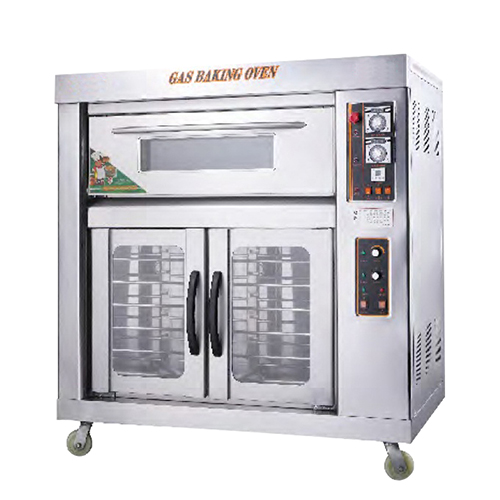
Deck Gas Convection Oven
If you’re running a professional bakery and looking for all-in-one baking gear that saves space and cuts running costs, the SYBO deck gas convection oven is a solid pick for daily commercial use. We manufacture this equipment at a professional factory in China. It adopts a practical integrated design, featuring gas convection baking decks on the upper part and a standalone dough proofer at the bottom. This all-in-one setup lets bakery teams finish dough proofing and formal baking using only one machine, which helps shop owners save extra equipment budgets and valuable kitchen floor space. Built entirely with stainless steel, the oven supports flexible temperature adjustment from 20℃ to 300℃, with both digital and mechanical control options to suit different staff habits. Each deck works independently, fitted with heat-resistant glass windows and internal lights, so bakers can monitor baking status anytime and achieve even, consistent finished results. As an experienced industrymanufacturer and dependable global bakery equipment supplier, SYBO designs the RFLF-12C and RFLF-24C models to withstand long-hour, heavy-duty commercial work. Fully certified with CE and RoHS, these convection ovens perform steadily when baking bread, pizza, cakes and various daily pastries for bakeries, hotel kitchens and commercial catering facilities.
Read MoreSend Inquiry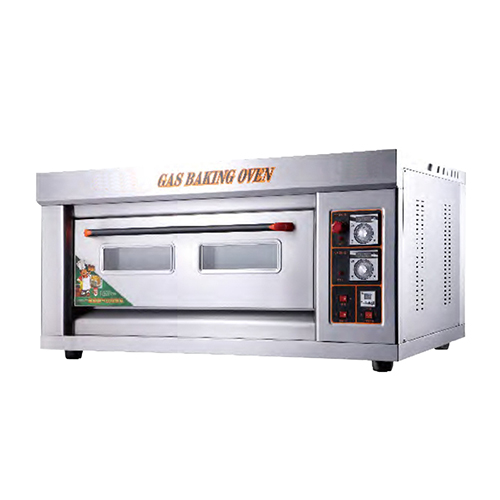
Gas Deck Oven For Bakery
The SYBO gas deck oven for bakery is a cost-effective commercial baking solution designed for bakery stores, hotel kitchens and catering institutions. Produced by a professional factory in China , this gas-powered deck oven abandons high-cost electric heating and adopts efficient gas combustion heating, perfectly adapting to regions with stable gas supply and users pursuing lower operating costs. Built with full stainless steel material, it supports dual digital and mechanical control, with a baking temperature range of 20℃ to 300℃. Each deck features independent temperature control, paired with high-temperature resistant viewing windows and built-in furnace lighting, ensuring stable and uniform baking results. As a reliable manufacturer and long-term global equipment supplier , SYBO optimizes every detail for commercial high-frequency use, with CE and RoHS certifications, making this gas deck oven a mainstream choice for daily mass baking of bread, pizza, cakes and pastries.
Read MoreSend Inquiry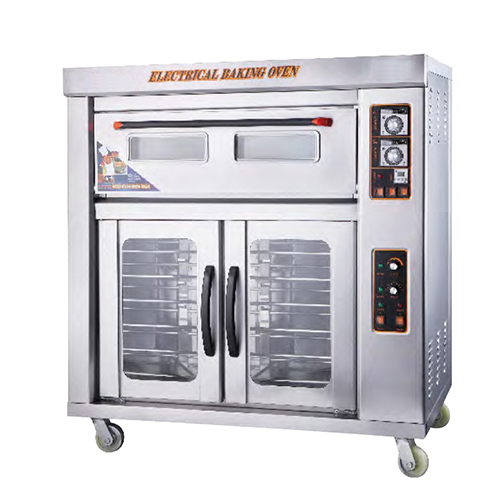
Deck Oven For Bakery
The SYBO deck oven for bakery is an all-in-one baking and proofing integrated equipment, specially built for commercial bakery production. Manufactured by a professional factory in China , this series covers DFLF-12C single-deck and DFLF-24C double-deck models, featuring upper baking cavity and lower proofer cabinet design. Adopting full stainless steel structure, independent layered temperature control and dual digital/mechanical control modes, it supports temperature adjustment from 20℃ to 300℃, meeting diversified baking and dough fermentation needs for bread, pizza, cookies and pastries. As a trustworthy manufacturer and long-term cooperativesupplier of global bakery equipment, SYBO relies on 25 years of export experience and strict quality control to deliver space-saving, energy-saving and high-stability deck ovens, widely used in bakeries, hotel kitchens, school canteens and catering workshops worldwide.
Read MoreSend Inquiry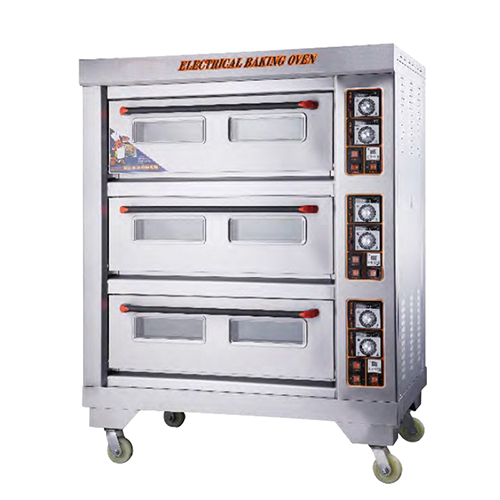
Three Deck Oven
The SYBO three deck oven (DFL-36) is a high-capacity electric baking equipment independently developed and produced by a professional factory in China . Designed for medium and large-scale commercial baking scenarios, this 3-deck 6-tray oven solves the low-output pain points of single and double-layer baking equipment. Adopting full stainless steel construction and independent layered temperature control system, it supports diversified baking of bread, cakes, pizza and pastries. As a reliable manufacturer and supplier of bakery machinery, SYBO strictly controls product quality with 25 years of export experience, making this three deck oven widely applicable for bakeries, hotel kitchens and catering processing workshops, delivering stable, energy-saving and high-efficiency baking solutions for global commercial users.
Read MoreSend Inquiry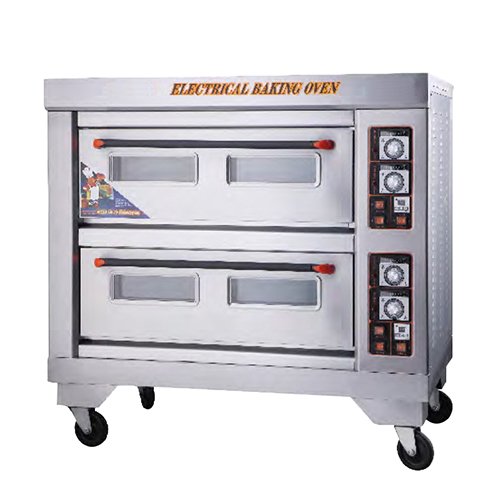
Electric Deck Oven
Electric deck oven is the most practical baking equipment for daily bakery work. SYBO DFL series electric deck oven is made for commercial usage, suitable for bakeries, cafes, hotels, school canteens and small food workshops. We keep the structure simple, operation easy and maintenance cost low, which fits most bakery operators with basic working experience.
Read MoreSend Inquiry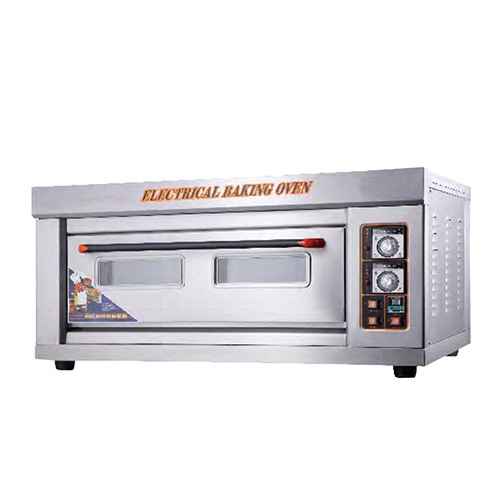
Commercial Deck Oven
Commercial deck oven is the most common baking equipment for small and medium bakeries, cafes, hotels and school canteens. SYBO DFL series electric deck oven is built for daily stable baking. We made this oven simple, durable and easy to operate for bakery workers with no complicated training required.
Read MoreSend Inquiry
SYBO is a professional Deck Oven manufacturer and supplier in China. We warmly welcome you to wholesale high quality products at competitive price from our factory.