Gas Pizza Oven
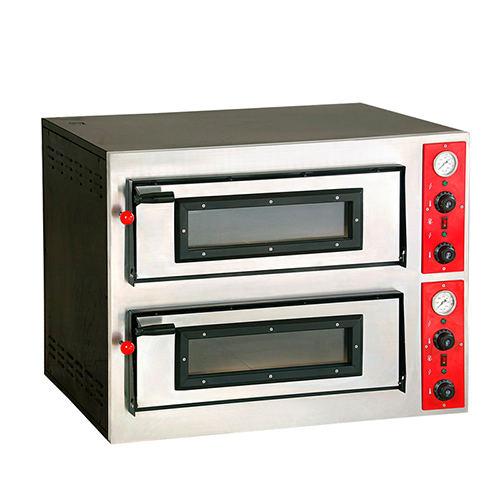
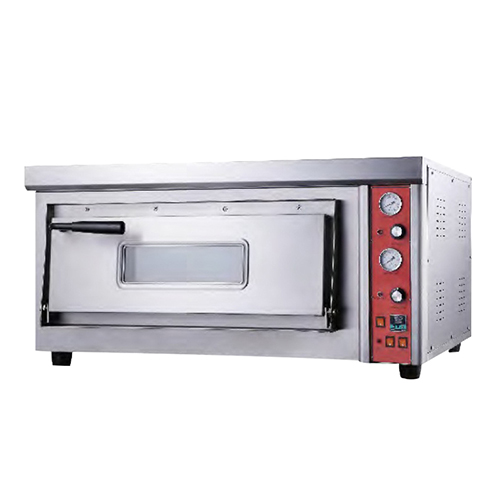
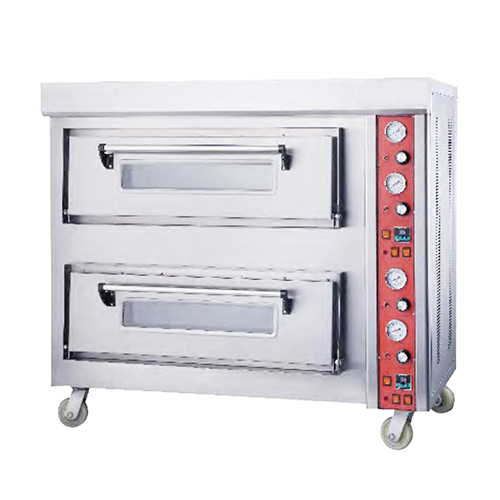
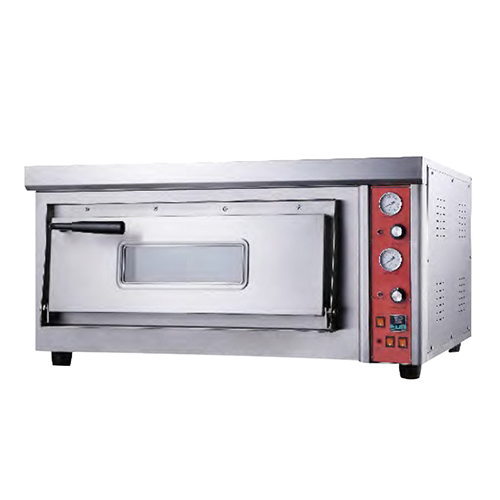
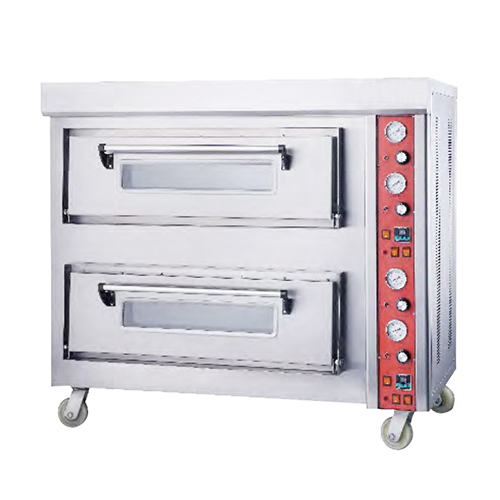
Gas Pizza Oven by SYBO runs a direct-flame chamber from 20°C to 500°C in two models, the RBS-1C and the double-deck RBS-2C. Built by a 25-year Ningbo factory in 304 stainless steel, it heats faster than an electric unit and switches between natural gas and LPG.
Send Inquiry
Product Description
A kitchen that already has gas on the wall is usually paying for it either way, and a direct-flame chamber is the quickest way to turn that supply into pizzas. Ningbo Sybo Machinery Co., Ltd., trading worldwide as SYBO, builds its fired range around that arithmetic. More than 25 years in commercial baking and catering equipment sits behind the Gas Pizza Oven, offered here in two models: the single-deck RBS-1C and the double-deck RBS-2C, which carries two separately controlled chambers in one frame. A burner floor heats the chamber from 20°C to 500°C and an electronic thermostat holds it there, while a flame-failure device cuts the gas the moment the burner goes out. The result is a machine that reaches working temperature faster than a stone-deck electric unit and then stays there through service.
- 20 to 500°CWider than stone-deck electric
- 1 or 2 DecksIndependent chamber control
- Natural Gas / LPGSet at the factory
- Flame-Failure Cut-OffStandard on both models
What It Does
A gas commercial pizza oven generates its heat where the food is rather than storing it in brick, and that single difference shapes everything about how it behaves in a kitchen. A burner floor heats the chamber directly, the thermostat holds the set point, and the machine recovers its temperature almost immediately after the door closes. Where an electric stone deck rewards patience and rewards the operator who plans the bake ahead, a fired chamber rewards throughput: it is built for a kitchen that has to keep producing without a pause between orders.
Three things follow from that working principle.
- Fast heat-up and quick recovery. Because the chamber is heated by flame rather than by waiting for a stone mass to charge, it comes up to temperature in a fraction of the time and returns to the set point quickly after each load. A kitchen can switch on at the start of a shift and be baking in the time it takes to prep the first dough, instead of waiting for a deck to soak.
- A chamber range that covers more than pizza. The 20°C to 500°C span is wider than a typical stone-deck electric machine, so the same unit holds a low, gentle setting for proving and warming and a hard 500°C top setting for fast, high-heat baking. That range is what lets a small kitchen run pizza, baked pasta, bread and oven snacks from one piece of equipment.
- Two chambers that work independently. The RBS-2C stacks two chambers in one frame, each on its own thermostat. One can hold a low bake while the other runs at full temperature, so a two-item menu does not have to be sequenced through a single cavity. The RBS-1C is the same chamber in a single-deck frame, sized for a site whose menu runs one product at a time.
For a kitchen that cooks to order rather than batching ahead, that combination is the whole case: an Gas Pizza Oven is a machine for keeping pace with the counter, not for planning around it.
Core Advantages
Five points separate a fired oven that pays for itself from one that becomes a maintenance problem, and they are the questions an experienced buyer asks first.
- Running cost that follows the gas tariff, not the electricity one. The burner draws 60W on the RBS-1C and 120W on the RBS-2C for its controls, while the heat itself comes from gas. In most markets gas is the cheaper way to raise heat, so continuous production costs less to run than an all-electric chamber, and the gap widens the busier the kitchen gets.
- Flame-failure protection as standard. A thermocouple device monitors the burner and shuts the gas off automatically if the flame goes out, which is the safety provision commercial gas equipment is expected to carry. It is fitted to both models rather than offered as an option.
- Natural gas or LPG, configured before it ships. The unit is built and set for one supply or the other at the factory, with the correct valve group for the gas it will run on. Buyers state the supply at the enquiry stage, which avoids the most common gas-equipment problem, which is a machine that arrives jetted for the wrong fuel.
- A compact frame with modular internals. The RBS-1C measures 1300×820×615 mm and the double-deck RBS-2C 1300×828×1430 mm, so the footprint is closer to a counter appliance than a floor installation. Components are modular, which keeps cleaning and servicing straightforward.
- Digital thermostatic control. Temperature is set numerically and held, so the output stays consistent across a long service and across different staff. For a kitchen whose orders arrive in a steady stream, that predictability is what keeps quality from drifting as the shift goes on.
Read together, those five points describe a machine that costs less to run, carries the safety provision the category requires, and fits into a site where a full installation would not. That is why a Gas Pizza Oven is usually the second purchase a growing kitchen makes and the first one it stops worrying about.
Specifications
Both models share the same chamber dimensions, the same temperature range and the same gas safety system. The differences are deck count, control power and weight. Note that the RBS-2C is the same width and depth as the RBS-1C and simply twice as tall, because the second chamber stacks on the first.
Technical Data
| Model | Decks | Power | Voltage | Temperature Range | Chamber Size | Dimensions (L×W×H) | Net Weight |
|---|---|---|---|---|---|---|---|
| RBS-1C | Single | 60 W | 220 V | 20–500°C | 860×655×170 mm | 1300×820×615 mm | 130 kg |
| RBS-2C | Double | 120 W | 220 V | 20–500°C | 860×655×170 mm × 2 | 1300×828×1430 mm | 280 kg |
The 60 W and 120 W figures cover the electronic controls and ignition only; the heat itself is supplied by the gas burner, not by the electrical connection. Both models are 220V single-phase. State your gas type and supply pressure when enquiring, and confirm the ventilation provision on site before installation.
The practical reading is a straight choice between one chamber and two. The RBS-1C suits a site running a single product line at a steady rate, and at 130 kg net it can be positioned by two people without specialist handling. The RBS-2C doubles output without taking more counter space, which is what makes it the right answer for a kitchen whose bottleneck is variety rather than floor area. Either way, the gas safety system, the temperature range and the chamber itself are identical, so the decision never involves a compromise on the parts that matter. Whichever deck count is chosen, a Gas Pizza Oven is specified once and then simply run.
Where It Fits
The deciding factors are three: whether the site has a gas supply, how fast the kitchen has to turn orders around, and how many different products share the oven. That resolves into a handful of typical operations.
- Pizzerias and delivery-only kitchens — a gas supply is usually already present, and the fast recovery from a fired chamber is exactly what a steady stream of delivery orders needs. The RBS-1C covers a single-product menu.
- Compact outlets and food stalls with space limits — the frame is closer to a counter unit than a floor installation, so a small premises can offer oven-baked items without giving up prep space.
- Multi-item casual restaurants and bakery cafes — the RBS-2C puts two independently controlled chambers on one base, so pizza, baked pasta, bread and snacks can be worked at the same time instead of one after another.
- Western restaurants and bars with a bar menu — the 20°C to 500°C range covers low-temperature warming and high-heat finishing on the same machine, which keeps a limited back-bar footprint productive.
- Importers and equipment distributors — dual-fuel configuration, export packing, documentation and mixed-model container loading suit a distributor serving a region rather than a single site.
Where gas is not the right answer is a kitchen with no supply, or one where the authorities require an all-electric fit-out, or a site whose gas provision cannot support the appliance safely. In those cases, and where the priority is the flavour of a stone deck rather than speed, an electric machine is the better fit. SYBO builds both and will advise on the choice from the site conditions rather than steer a buyer towards one. The question to settle first is simply whether the site can support the fuel a Gas Pizza Oven needs.
Safety & Service
A gas appliance is judged on its safety provision first, so these are the points worth checking before an order is placed rather than after delivery.
- Flame-failure cut-off. The burner is monitored continuously; if the flame is extinguished, for any reason, the gas supply is closed automatically. That is the core protection for a commercial gas appliance and it is fitted as standard.
- Factory configuration for the fuel supplied. Natural gas and LPG burn differently and need different valve settings. The unit is configured before dispatch for the gas it will actually run on, and the buyer confirms that at the enquiry stage so nothing has to be re-jetted on site.
- Modular construction for servicing. Burner, controls and chamber components are separately accessible, so routine cleaning and any later part replacement do not require dismantling the frame, which matters for a machine that will be in daily use for years.
- Documentation and the after-sales path. Operating instructions, installation guidance and clearly stated warranty and spare-parts arrangements are supplied with the machine, and larger projects can be discussed with custom configurations.
Support continues after delivery. Installation is a matter of siting the unit, making the gas connection and venting it correctly, and all three are covered in the instructions supplied with each machine and can be reviewed with the buyer beforehand. Commissioning questions are handled through the same channel as the original enquiry, and specification sheets, drawings and photographs can be issued before an order is placed so the site can be prepared in advance.
For anyone who has to justify the decision to a manager, a landlord or an importer, the useful part is that the specification is published in full, including the gas configuration, chamber size, control load and weight, and that the safety provision is standard rather than an extra. A Gas Pizza Oven bought on that basis is a decision that can be explained afterwards.
Certification & Export
CE requirements are met across this range, and RoHS compliance applies to the electrical control components. Units are packed on export cartons suited to sea freight and ship from Ningbo, next to Beilun Ocean Port, so freight arrangements and lead times are straightforward. Buyers can use their own forwarder, or ask SYBO to arrange freight and export documentation.
FAQ
Q and A — the questions buyers ask most often before a first order is placed.
Q: Can it run on either natural gas or LPG?
A: Yes, but the machine is configured for one or the other at the factory, with the matching valve group. Tell us which supply the site has when you enquire and the unit will be set for it before dispatch. What you should not do is swap between fuels after delivery without changing the valve configuration, because the two gases have different calorific values and pressures.
Q: Do I need to change the gas type if I move premises?
A: If the new site runs on a different gas from the old one, yes. Moving from natural gas to LPG or the reverse requires the valve group to be changed to suit the new supply; this is a service job rather than something to attempt on site. If you know a move is coming, tell us at the order stage and we can advise on the parts needed.
Q: What safety features does it have?
A: Both models carry a flame-failure device, fitted as standard rather than as an option. The burner is monitored continuously and the gas supply is shut off automatically if the flame goes out. As with any commercial gas appliance, correct installation, adequate ventilation and a competent gas engineer for commissioning are still required, and local regulations on gas appliances in commercial kitchens apply.
Q: Why is there a voltage and power rating on a gas oven?
A: The electrical connection runs the electronic thermostat and the ignition, not the heating. That is why the figures are small: 60W on the RBS-1C and 120W on the RBS-2C, both at single-phase 220V. The heat comes from the burner. It means the appliance still needs a power point nearby, but the electricity bill is a rounding error next to the gas.
Q: Which model do I need, the single-deck or the double-deck?
A: Choose by how many different products run at the same time, not just by volume. If your menu is one product in a steady stream, the RBS-1C at 130 kg does the job from a compact base. If you need to bake two things at different temperatures simultaneously, the RBS-2C gives you two independent chambers stacked on the same footprint, at 280 kg. Both share the same chamber size, temperature range and safety system, so you are only choosing deck count.
Q: How should it be installed, and what about ventilation?
A: It needs to be connected by a competent gas engineer, with a correctly sized supply line for the fuel type, and it must be vented in line with local regulations for commercial gas cooking equipment. Confirm the ventilation provision at the site before ordering, because this is the most common cause of an installation being delayed. Installation and commissioning guidance is supplied with the machine.
Q: Is a sample available, and what is the minimum order?
A: A single unit can be supplied as a sample so the build and the bake can be checked directly. Bulk pricing, carton quantities and mixed-model orders are quoted on request, and specification sheets, drawings and photographs are issued before an order is confirmed. Custom configurations can be discussed for larger projects.
Hot Tags: Gas Pizza Oven
Related Category
Planetary Mixer
Spiral Mixer
Dough Sheeter
Dough Divider Rounder
Convection Oven
Rotary Convection Oven
Deck Oven
Proofer
Bread Slicer
Pizza Oven
Send Inquiry
Please Feel free to give your inquiry in the form below. We will reply you in 24 hours.
Related Products