
Abstract
A Commercial Gas Deep Fryer is a cornerstone of high-volume foodservice operations, yet its performance depends on far more than burner output alone. This guide examines the engineering principles, installation requirements, maintenance protocols, and safety standards that separate a reliable workhorse from a costly liability. From understanding heat transfer mechanics to implementing daily filtration routines, each section provides actionable insights drawn from industry practice. Whether you are specifying a new unit or optimizing an existing station, the factors outlined here will help you make informed decisions that protect food quality, extend equipment life, and ensure a safer kitchen environment.
Table of Contents
- How does a gas fryer transfer heat without submerging an element?
- Why does recovery speed matter more than raw BTU ratings?
- What installation and ventilation requirements are non-negotiable?
- How should daily and weekly maintenance be structured?
- What are the essential safety protocols for gas fryer operation?
- How do you troubleshoot common ignition and temperature issues?
- Frequently Asked Questions
How does a gas fryer transfer heat without submerging an element?
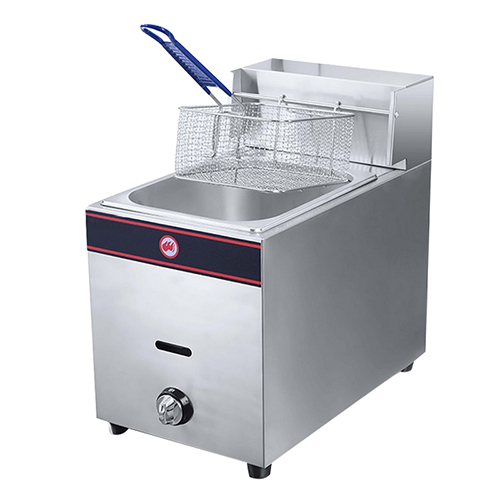
The defining characteristic of a gas fryer is its external heat source. Unlike electric models that rely on immersion elements, a gas unit fires a burner into a metal tube—or a series of tubes—that passes through the oil vessel. The flame heats the tube from the inside, and the tube transfers that thermal energy to the surrounding oil through conduction. This arrangement keeps all live electrical components completely outside the frying medium, which is why a gas unit does not require the heavy dedicated circuit that an equivalent electric machine demands.
The practical implications of this design extend well beyond electrical simplicity. Because the heat arrives through a wall rather than through an element dropped into the tank, the oil never contacts a live component. The parts that wear—burners, thermostatic controls, drain fittings—can be serviced without disturbing the tank itself. In a kitchen where the frying station runs for hours at a time, this serviceability matters as much as raw cooking power.
Tube-fired versus open-pot configurations
Gas fryers generally fall into two vessel categories. Tube-fired models route the burner flame through tubes that are submerged in the oil, creating a large surface area for heat exchange. Open-pot designs place the burner beneath a flat-bottomed vessel, heating the oil through the floor of the pot. Tube-fired configurations are more common in high-volume commercial settings because they distribute heat more evenly and are less prone to hot spots that accelerate oil degradation.
Both designs share a critical dependency: the oil must cover the heat transfer surface at all times. Operating a tube-fired fryer with insufficient oil exposes the tube to excessive temperatures, which can crack the metal and create a leak path. The same risk applies to open-pot units, where a low oil level can scorch the vessel bottom and cause permanent warping.
Why does recovery speed matter more than raw BTU ratings?
Recovery time—the period required for the fryer to return to its set cooking temperature after a basket of cold food is introduced—is the single most consequential performance metric for a Commercial Gas Deep Fryer. A unit with a high BTU rating that recovers slowly will produce soggy, oil-logged food, because the temperature drop during cooking allows the oil to penetrate the crust before it sets. A well-matched burner and tank geometry, by contrast, maintains a tight temperature band that produces consistently crisp results.
Industry benchmarks provide useful reference points. For gas fryers, a maximum recovery time of approximately two minutes and twenty-five seconds from 250°F to 300°F (121°C to 149°C) is considered acceptable performance. In practice, a healthy unit should return to its cooking setpoint within about ninety seconds and hold within ten degrees of that target. When recovery times stretch beyond these windows, the cause is rarely the burner alone.
Factors that influence recovery performance
- Burner output relative to oil volume: A 40-pound fryer typically requires 100,000 to 120,000 BTU per hour to achieve competitive recovery times.
- Gas supply pressure: Fluctuating or undersized gas lines can starve the burner during peak demand.
- Oil condition: Degraded oil has a lower specific heat capacity and loses temperature more rapidly under load.
- Tank geometry: A deeper, narrower vessel loses heat faster than a shallow, wide one with the same volume.
- Basket loading discipline: Overloading a basket beyond the manufacturer's recommendation overwhelms the recovery capacity of any fryer.
The relationship between BTU input and oil capacity is not linear. A small countertop unit may perform admirably with 26,500 BTU, while a large floor-standing model requires 150,000 BTU or more to achieve comparable recovery on a much larger oil volume. The correct specification matches burner output to the volume of oil that will be cooking at peak service, not to the size of the tank alone.
| Oil Capacity Range | Typical BTU Input | Target Recovery Time (250°F–300°F) | Recommended Daily Output |
| 6–12 liters | 26,500–50,000 | Under 3 minutes | Light to moderate |
| 14–28 liters | 70,000–120,000 | Under 2 minutes 30 seconds | Moderate to high |
| 30–50 liters | 120,000–165,000 | Under 2 minutes | High volume |
| 50+ liters | 150,000–200,000+ | Under 2 minutes 30 seconds | Continuous service |
What installation and ventilation requirements are non-negotiable?
A gas fryer cannot be installed wherever space allows. The building must accommodate the machine, not the reverse. Three requirements are absolute: a supply of the correct gas type at the specified pressure, a ventilation system capable of removing combustion byproducts and cooking vapors, and a licensed fitter to connect and commission the unit.
Proper installation of a Commercial Gas Deep Fryer requires careful attention to gas supply, ventilation, and clearances. Ventilation is the most frequently underestimated requirement. A deep fryer must be installed under a Type I hood that extends at least six inches beyond the appliance on both sides. The hood must connect to an exhaust duct that removes steam, smoke, and combustion gases. Proper air balance in the kitchen is equally important—a negative pressure environment can cause flames to roll out of the fryer's flue, creating an immediate fire hazard.
Clearance and airflow considerations
Clearances around the fryer serve two purposes: they allow combustion air to reach the burner, and they prevent heat from damaging adjacent surfaces. When the unit is set on non-combustible flooring, a minimum of three inches of toe room must be provided to prevent restriction of the air opening at the bottom of the unit. Clearance specifications are printed on the rating plate and in the installation manual; deviating from them risks voiding the warranty and compromising safety.
Gas connection requirements vary by jurisdiction but typically mandate a line size of three-quarter inch or larger, with a flexible connector of the same diameter if one is used. The manifold pressure must match the data plate specification for the gas type the unit was built for. A mismatch between supply pressure and burner design pressure produces either incomplete combustion—visible as a yellow, lazy flame—or an over-fired condition that shortens burner life and creates carbon buildup.
- Locate the fryer on a level surface to ensure even oil distribution across the heat transfer area.
- Do not attach an extension to the gas flue exhaust stack; this disrupts the designed draft and can cause combustion byproducts to enter the kitchen.
- Install the exhaust fan at least two feet above the vent opening at the top of the fryer.
- Ensure that wall-mounted fans or air conditioning vents do not blow directly onto the fryer's combustion area.
- Verify that all ventilation components conform to local, state, and national codes before commissioning.
How should daily and weekly maintenance be structured?
Maintenance of a Commercial Gas Deep Fryer is not a single task but a layered routine. The daily practices protect oil quality and food taste; the weekly and periodic procedures protect the equipment itself. Neglecting the daily layer accelerates oil degradation, which in turn increases the frequency of boil-outs and shortens the working life of the frypot.
Daily oil management and filtration
Filtering the oil at least once per day is the minimum standard for any commercial operation. The purpose is to remove suspended food particles—crumbs, batter fragments, and fine sediment—that continue to cook and carbonize when left in the oil. Carbonized particles are the primary accelerant of oil breakdown; they catalyze oxidation and produce the dark, bitter compounds that ruin food flavor.
Filtration can be performed manually, with a portable filtration machine, or through a built-in system. Manual filtration involves draining the oil through a fine-mesh strainer or cheesecloth into a clean container, then returning it to the frypot. Built-in filtration systems simplify the process by pumping oil through a filter medium and returning it directly to the vessel, reducing both labor and the risk of spills. Regardless of method, the frypot should be wiped free of sediment before filtered oil is returned.
Weekly cleaning and boil-out
At least once per week—and more frequently in high-volume operations—the fryer requires a boil-out procedure. This involves draining the oil, filling the frypot with water and a commercial fryer detergent, and heating the solution to a gentle boil for fifteen to twenty minutes. The alkaline solution breaks down carbonized grease and polymerized oil that ordinary washing cannot remove. After boiling, the solution is drained, the frypot is rinsed with a vinegar-water solution to neutralize any alkaline residue, and all surfaces are wiped dry before fresh oil is introduced.
Residual water is the enemy of a fryer startup. Even a small amount of moisture left in the frypot will cause violent splattering when hot oil is added. The frypot must be completely dry before refilling. The same principle applies to fry baskets and accessories: they should be soaked and scrubbed during the boil-out and thoroughly dried before returning to service.
| Frequency | Task | Purpose |
| Daily | Filter oil; skim crumbs; wipe exterior | Remove particulate matter; protect oil quality |
| Daily | Check oil level and top up as needed | Maintain proper heat transfer coverage |
| Weekly | Boil-out with commercial detergent | Remove carbonized grease and polymerized oil |
| Weekly | Clean baskets and accessories | Prevent flavor transfer and grease buildup |
| Monthly | Inspect gas line, connections, and flue | Detect leaks or blockages before they become failures |
| Quarterly | Verify thermostat calibration; inspect burner | Ensure temperature accuracy and combustion efficiency |
What are the essential safety protocols for gas fryer operation?
Deep frying involves two hazards that demand constant respect: hot oil at temperatures exceeding 350°F (177°C) and an open flame in proximity to combustible cooking media. Safety protocols for a commercial gas deep fryer operation are not bureaucratic formalities; they are the accumulated lessons of kitchen fires and burn injuries that could have been prevented.
Personal protective equipment and handling
Anyone working with or near a deep fryer should wear protective equipment appropriate to the task. Rubber gloves and safety glasses are the minimum for cleaning and oil handling operations. Slip-resistant footwear is essential because oil splashes create a slick film on kitchen floors that is difficult to detect until a fall occurs. Clothing should be close-fitting; loose sleeves and dangling fabric can catch on basket handles or contact hot surfaces.
The most dangerous moment in fryer operation is the introduction of food into hot oil. Frozen products must be shaken free of excess ice crystals before they enter the oil, because ice converts to steam explosively and carries hot oil upward. Baskets should be lowered slowly and never filled beyond the manufacturer's recommended capacity. Reaching over a fryer to retrieve an item from a back shelf should be avoided entirely; the risk of a sleeve or arm contacting hot oil is too great.
Fire prevention and response
A grease fire is not extinguished with water. Water added to burning oil flashes to steam instantly, expanding hundreds of times in volume and ejecting burning oil in every direction. The correct response to a fryer fire is to cover the vessel with a metal lid or use a Class K fire extinguisher, which is specifically formulated for cooking media fires. Every commercial kitchen with a deep fryer must have a Class K extinguisher within immediate reach of the station, and all staff should know its location and operation.
Prevention is always preferable to response. The fryer should be equipped with a high-limit safety control that cuts the gas supply if the oil temperature exceeds a preset maximum—typically 450°F (232°C). This device is a final barrier against a runaway temperature condition. It should be tested periodically to confirm that it trips at the correct threshold and that the gas valve closes completely when it does.
- Never leave a frying station unattended while the burner is on.
- Keep the area around the fryer free of combustible materials, including paper towels, cardboard, and plastic wrap.
- Do not attempt to move a fryer that contains hot oil.
- Allow oil to cool to below 40°C (104°F) before draining, unless the fryer is equipped with a safe hot-oil draining system.
- Train all staff on first aid for burns and the location of the nearest fire suppression equipment.
How do you troubleshoot common ignition and temperature issues?
When a gas fryer fails to ignite, the problem usually lies in one of five areas: gas supply, ignition module, igniter, flame sensor, or air supply. The troubleshooting sequence should begin with the simplest checks and proceed toward component-level diagnosis only when the basics have been eliminated.
Ignition failure
The first check is whether gas is reaching the unit. The manual shutoff valve must be fully open, and the gas line pressure should be verified with a manometer. If gas is present but the burner does not light, the ignition module may not be receiving a signal from the flame sensor. A modern gas fryer's ignition module sends an alarm and shuts the gas valve if it does not confirm a flame within approximately four seconds. The flame sensor's microamp reading should be measured; different ignition modules have different acceptable ranges, but most require a signal in the range of 1.7 to 3.5 microamps for reliable flame detection.
If the flame sensor reading is within specification and the igniter is sparking but the burner still will not light, the igniter itself may be cracked or the ignition wire may be damaged. A visual inspection of the igniter and its wiring will reveal obvious defects. Less common causes include a defective combustion fan, a dirty blower motor, or inadequate makeup air in the kitchen.
Temperature control problems
When a fryer heats but does not hold temperature accurately, the thermostat or temperature probe is the primary suspect. A calibrated probe thermometer should be placed in the center of the oil, and the fryer should be set to a known temperature such as 350°F (177°C). The actual oil temperature should be allowed to stabilize and then compared to the setpoint. If the deviation exceeds ten degrees in either direction, the thermostat requires recalibration or replacement.
Slow recovery time—where the fryer takes longer than two and a half minutes to climb back to temperature after a basket drop—often points to a gas supply issue rather than a control problem. Burner manifold pressure should be checked under high-demand conditions, such as during the lunch rush, because pressure drops under load are a common cause of sluggish recovery. If manifold pressure is within specification and recovery remains slow, the burner tubes may be partially obstructed with carbon deposits, requiring a professional cleaning.
Frequently Asked Questions
What gas type should I specify for a commercial gas deep fryer?
The gas type is fixed at the time of order. Natural gas and liquid propane require different burner orifices and manifold pressure settings. A unit built for natural gas cannot be safely operated on propane without a conversion kit, and vice versa. Specify the gas type that is available at the installation site and confirm that the supply pressure matches the rating plate specification.
How often should the oil be changed in a commercial gas fryer?
There is no universal schedule. Oil life depends on the menu mix, cooking volume, filtration discipline, and operating temperature. A general guideline is to change oil after six to eight uses for non-breaded vegetables and after two to four uses for breaded items, fatty meats, or fish. Visual and sensory signals—darkening, excessive smoking at normal temperatures, foaming, or off-flavors—are more reliable indicators than a calendar.
Can a gas fryer be installed without a Type I hood?
No. Commercial gas fryers produce combustion byproducts, steam, and grease-laden vapors that require capture and removal by a Type I hood. Installing a gas fryer without adequate ventilation creates a fire hazard and violates most building and fire codes. The hood must extend at least six inches beyond the fryer on both sides and connect to an exhaust duct that terminates outside the building.
What causes flames to roll out of the fryer's flue?
Flames rolling out of the flue typically indicate negative pressure in the kitchen. This condition occurs when the exhaust system removes more air than the makeup air system supplies, creating a pressure differential that pulls combustion gases downward instead of allowing them to rise through the flue. The solution is to rebalance the kitchen's air handling system so that makeup air volume matches or slightly exceeds exhaust volume.
Is it safe to use a gas fryer with a cracked burner tube?
No. A cracked burner tube allows flame to escape into areas not designed for combustion, creating a fire hazard and potentially allowing unburned gas to accumulate. A cracked tube also disrupts the heat distribution pattern, causing uneven cooking and hot spots that accelerate oil degradation. The fryer should be taken out of service immediately and the burner tube replaced by a qualified technician.
How do I know if the thermostat on my gas fryer is accurate?
Place a calibrated probe thermometer in the center of the oil and set the fryer to 350°F (177°C). Allow the temperature to stabilize for several minutes, then compare the reading on the probe to the setpoint. If the difference exceeds ten degrees, the thermostat should be recalibrated or replaced. A thermostat that is consistently off by more than ten degrees will produce inconsistent food quality and may cause the oil to overheat or underperform.
Ready to specify a commercial gas deep fryer that matches your kitchen's demands?
The right equipment partner makes the difference. SYBO brings over 25 years of export experience to every unit, with models ranging from compact countertop bodies to high-capacity floor-standing configurations.
Discuss your requirements with our team and get a configuration recommendation tailored to your gas supply, ventilation capacity, and menu profile.
Contact Us for a Custom RecommendationOur engineers will review your kitchen layout and operational parameters to help you select the most suitable model.