
Planetary Mixer Practical Guide: From Mixing Principles to Production Optimization
In industries ranging from food processing and pharmaceuticals to battery materials and adhesives, the planetary mixer stands as one of the most versatile and reliable mixing solutions available. Unlike conventional mixers that simply rotate a blade around a fixed axis, a planetary mixer mimics the motion of planets orbiting the sun—the mixing tool rotates on its own axis while simultaneously revolving around the central axis of the mixing bowl. This dual-motion principle delivers unparalleled mixing uniformity, efficiency, and adaptability. The practicality of a planetary mixer rests on four pillars: mechanical design, mixing kinematics, correct selection, and disciplined operation and maintenance.
I. Core Operating Principle: Why "Planetary" Matters
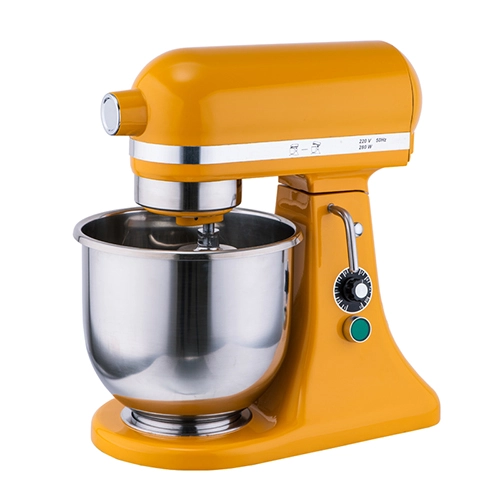
The defining characteristic of a planetary mixer is its dual-axis motion:
-
Rotation (Spindle Revolution): The mixing head (carrying the agitator) revolves around the center of the mixing bowl, sweeping the entire circumference.
-
Rotation (Agitator Self-Rotation): Simultaneously, the agitator blade spins on its own axis, creating intense shear and flow within the material.
This combined motion ensures that:
-
No dead zones exist in the bowl—every particle is continuously exposed to the mixing action.
-
High shear forces are generated at the blade-material interface, enabling efficient dispersion of powders into liquids or homogenization of viscous pastes.
-
Heat transfer is enhanced, as material is constantly moved away from and toward the bowl wall, allowing effective cooling or heating via jacketed bowls.
To visualize the difference, consider this comparison:
| Mixer Type | Motion Pattern | Mixing Efficiency | Suitable Viscosity Range |
|---|---|---|---|
| Planetary Mixer | Revolution + Self-rotation | Excellent | Low to very high (up to several million cP) |
| Simple Agitator | Fixed-axis rotation | Moderate | Low to medium |
| Double-Planetary Mixer | Two agitators, each with planetary motion | Superior | High to ultra-high |
II. Key Components and Their Practical Functions
Understanding the anatomy of a planetary mixer helps you make informed decisions about selection and maintenance:
-
Agitator Blades (Tools): The shape and material of the blades determine the mixing action.
-
Hook / Spiral Blades: Best for kneading and folding high-viscosity doughs and pastes.
-
Dispersing Discs: Equipped with teeth, ideal for breaking down agglomerates and dispersing pigments or fillers.
-
Paddle / Frame Blades: Provide gentle mixing for shear-sensitive materials like creams and gels.
-
Material: Food-grade stainless steel (316L) for hygiene; wear-resistant coated alloys for abrasive materials like battery slurries.
-
Mixing Bowl (Container):
-
Typically jacketed for heating (steam, hot water) or cooling (chilled water, refrigerant).
-
Removable bowl designs allow batch transfer and cleaning; fixed bowls are common in continuous or high-capacity operations.
-
Capacity ranges from laboratory scale (0.5 L) to industrial scale (over 2000 L).
-
Drive System:
-
Gear-driven or belt-driven mechanisms transmit power from the motor to both revolution and rotation axes.
-
Variable Frequency Drives (VFDs) are standard on modern machines, enabling speed control from a few RPM to over 3000 RPM (for dispersion).
-
Safety Systems:
-
Bowl interlocks prevent operation when the bowl is not fully engaged.
-
Lid safety switches stop the machine instantly if the guard is opened during operation.
-
Overload protection shuts down the mixer before motor damage occurs.
III. How to Select the Right Planetary Mixer: A Practical Decision Framework
Choosing the wrong mixer can result in poor product quality, excessive energy consumption, and costly downtime. Focus on these criteria:
1. Material Characteristics
Viscosity: Thin liquids (e.g., milk, juice) need high-speed, low-torque designs. High-viscosity pastes and doughs require low-speed, high-torque planetary mixers with robust gearing.Rheology (Flow Behavior): Shear-thinning materials (e.g., ketchup) become easier to mix as speed increases; shear-thickening materials (e.g., certain slurries) become more resistant. Your mixer's speed range must match your material's behavior.
Sensitivity: If your material is heat-sensitive or shear-sensitive, opt for slower speeds and efficient cooling jackets to prevent degradation.
2. Production Scale
-
Laboratory / R&D: 0.5–10 L capacity; often benchtop units with interchangeable blades.
-
Pilot Scale: 10–100 L; used for process development and small-batch production.
-
Production Scale: 100–2000+ L; heavy-duty construction with automated controls.
3. Hygiene and Cleanability
For food and pharmaceutical applications, look for:CIP (Clean-in-Place) capability—no disassembly required for cleaning.
Sanitary design: No sharp corners, crevices, or threaded fittings where product can accumulate.
316L stainless steel contact surfaces with electropolished finish (Ra < 0.8 µm).
For non-hygienic industrial applications (e.g., construction adhesives), carbon steel or painted finishes may be acceptable.
4. Ancillary Features
- Vacuum operation: Removes entrained air, ideal for deaerating cast resins, silicone sealants, or pharmaceutical creams.
-
Temperature control: Jacketed bowls with precise PID controllers for exothermic or temperature-critical reactions.
-
Integration: Compatibility with upstream (weighing, feeding) and downstream (filling, packaging) systems.
IV. Operation and Maintenance: Ensuring Long-Term Reliability
Even the best planetary mixer will underperform or fail prematurely if operated and maintained incorrectly. Follow these field-proven practices:
1. Pre-Operation Checklist
Verify bowl engagement: Ensure the bowl is correctly locked into position.Check blade clearance: The gap between blade and bowl wall should be 3–5 mm for most applications. Excessive gap reduces efficiency; insufficient gap causes wear and potential metal contamination.
Inspect seals: Mechanical seals or O-rings should show no signs of leakage, cracking, or wear.
Confirm lid closure: All safety interlocks must be engaged before starting.
2. Operating Best Practices
Sequential loading: For powder-liquid mixing, always introduce liquid first, then add powders gradually—this minimizes dusting and reduces agglomerate formation.Speed ramping: Start at low speed to incorporate materials, then gradually increase to target speed. Sudden acceleration can overload the drive and cause material splashing.
Monitor temperature: If the bowl temperature exceeds the material's safe limit, activate cooling or reduce speed.
Avoid overfilling: Fill level should not exceed 70–80% of bowl capacity to allow room for material movement and expansion.
3. Cleaning and Sanitization
-
Immediate cleaning: Residue is easier to remove while still warm and wet. Delayed cleaning allows material to harden, requiring more aggressive (and damaging) methods.
-
CIP procedure: Use sequential rinses (water → detergent → rinse water → sanitizer) with appropriate temperature and flow rates. Verify cleanliness via visual inspection and swab testing.
-
Manual cleaning: For removable bowls, use non-abrasive brushes and approved cleaning agents. Avoid high-pressure water jets that can damage seals or bearings.
4. Preventive Maintenance Schedule
| Frequency | Task |
|---|---|
| Daily | Clean exterior and visible interior surfaces; check oil levels in gearbox. |
| Weekly | Inspect blades for wear, chips, or deformation; verify seal integrity. |
| Monthly | Lubricate bearings and pivot points; check belt tension (if belt-driven). |
| Quarterly | Calibrate speed sensors and temperature probes; inspect electrical connections. |
| Annually | Replace wear parts (seals, gaskets, belts); professional inspection of gearbox and motor; conduct performance test with standard material. |
5. Common Failure Modes and Troubleshooting
| Symptom | Likely Cause | Corrective Action |
|---|---|---|
| Motor overload trips | Viscosity too high; overfilled bowl; blade damaged | Reduce fill level; verify material viscosity; inspect/replace blade |
| Product inconsistent (segregation) | Insufficient mixing time; wrong blade type | Increase mixing time; select appropriate blade geometry |
| Excessive vibration | Unbalanced load; worn bearings; loose mounting | Reposition material; replace bearings; tighten mounting bolts |
| Leakage at shaft | Worn mechanical seal; incorrect seal type | Replace seal; verify seal material compatibility with product |
| Overheating of product | Insufficient cooling; speed too high | Increase cooling flow; reduce mixing speed |
V. Applications Across Industries
To illustrate the versatility of planetary mixers, here are some typical applications:
| Industry | Application | Typical Product Examples |
|---|---|---|
| Food | Dough, batter, sauces, fillings | Bread dough, cake batter, mayonnaise, chocolate |
| Pharmaceutical | Creams, ointments, gel formulations | Topical creams, dental materials, suppository bases |
| Cosmetics | Emulsions, creams, mascara, lipstick | Face creams, lotions, color cosmetics |
| Battery Materials | Electrode slurry for Li-ion batteries | Anode/cathode pastes for EV batteries |
| Adhesives & Sealants | Silicone, epoxy, polyurethane formulations | Construction sealants, electronic potting compounds |
| Chemicals | Pigment dispersions, lubricating greases | Paints, inks, printing pastes |
The planetary mixer is a remarkably practical and versatile piece of equipment, but its real-world performance hinges on more than just its nameplate specifications. True utility begins with a thorough understanding of the mixing kinematics, extends through careful selection based on material properties and production scale, and culminates in disciplined operation and preventive maintenance. When you specify, operate, or maintain a planetary mixer, think like a process engineer—consider the interplay of geometry, rheology, and thermodynamics. That is the mindset that turns a machine into a reliable, long-term production partner.