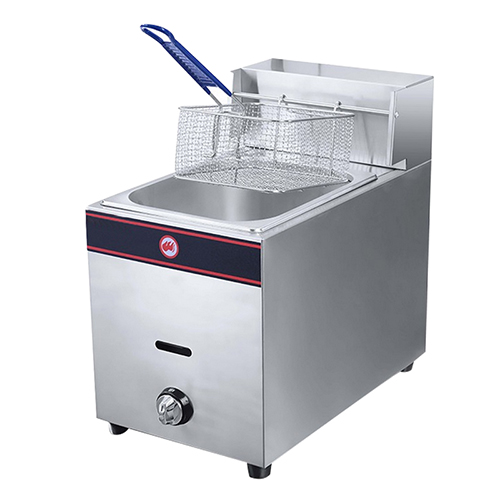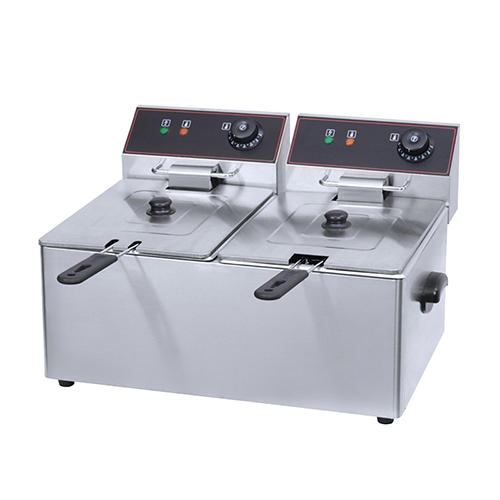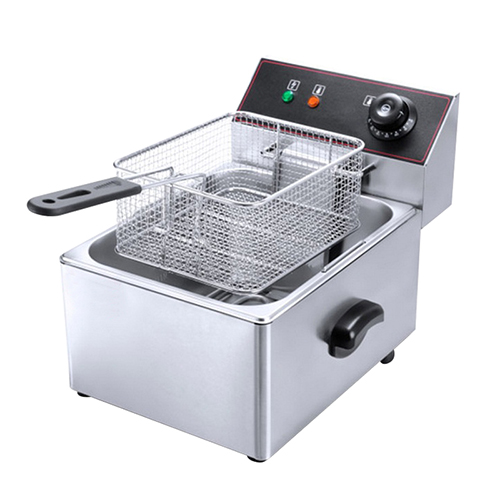
Commercial Deep Fryer
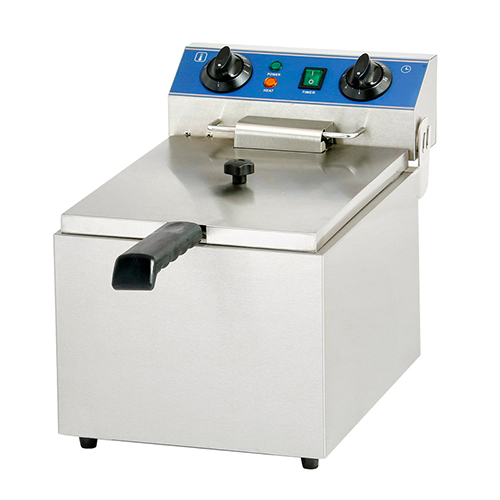
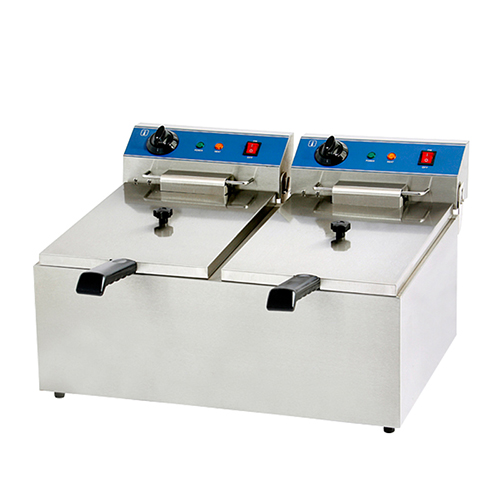
Commercial Deep Fryer by SYBO comes in two 17-litre builds - a single tank at 5.0 kW and a twin unit drawing 10.0 kW in total - for kitchens that cannot afford to slow down at midday. The Ningbo factory runs every unit under load before dispatch.
Send Inquiry
Product Description
What limits a frying line is not how much the basket holds. It is how far the oil falls when a cold load goes in, and how long it takes to climb back. Load a full basket into a tank that is too small and the temperature sags, the coating drinks oil, and the next order sits waiting on the element. SYBO, a Ningbo manufacturer with more than 25 years in commercial kitchen equipment, builds the Commercial Deep Fryer for the other case: two 17-litre machines, one tank and two, sized so a busy counter keeps serving while the oil comes back up.
- 17 LOil per tank
- 5.0 kWEF-171 load
- 10.0 kWEF-172 total
- 8.0 kgEF-171 net
Why 17 Litres
A 17-litre tank is not simply a larger version of a small one. The way it behaves under load is different, and that difference is the reason this size exists at all.
- A smaller dip per basket. The same cold load takes a smaller share of the heat held in 17 litres than it would in a 6-litre tank, so the oil falls less and the food is less likely to come out pale or heavy with oil.
- Fewer dips per service. If one batch carries more of an order, the station makes fewer trips into the oil - and every trip avoided is one less drop in temperature to recover from.
- A wider working window. Between orders there is time to bring the oil back rather than chase it, which is what a lunch or evening peak actually asks of a station.
Put together, those three effects are why a larger tank holds up in the middle of service rather than only at the start of it. A Commercial Deep Fryer of this size is bought for the hour when the kitchen cannot afford to slow down, not for the average day.
Load Planning
Machines in this class are fixed equipment, not plug-in appliances, and the electrical planning is the part that is most often left until too late.
Supply Table
| Model | Total connected load | Approx. current at 230 V | What to plan for |
|---|---|---|---|
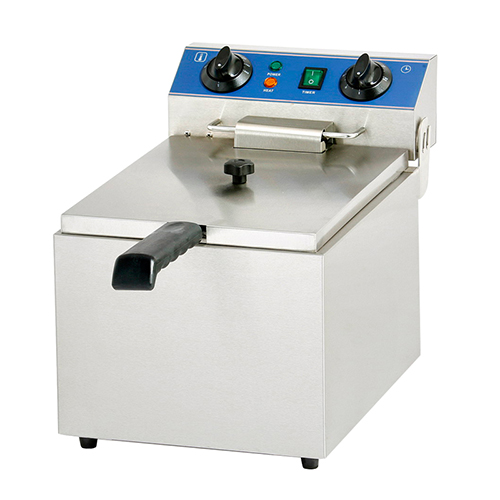
| EF-171 | 5.0 kW | About 22 A | Its own circuit and breaker, single-phase |
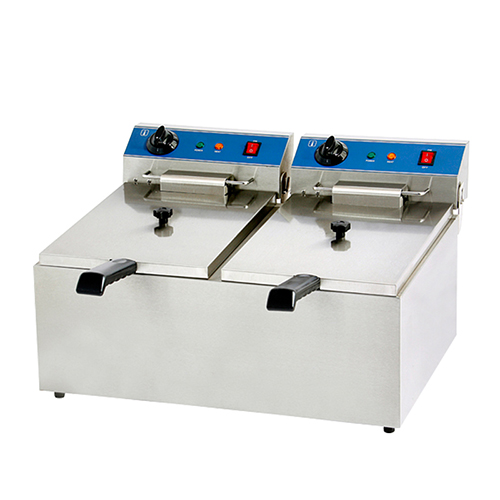
| EF-172 | 10.0 kW | About 42 - 45 A | Its own circuit, breaker and cable sized on the total |
The figure that matters is the total, not the per-tank rating. Power is quoted per tank in the table further down, so a twin-tank unit draws the sum of both sides. Have a qualified electrician work from the rating plate rather than from a general-purpose socket, and tell us at the enquiry stage if the building has 380 V three-phase available: voltage, rating plate and packing are built to order, which means the electrical configuration is fixed during production and cannot be altered after dispatch.
Done early, the electrical question costs nothing. Left until the unit is on site, it decides whether the machine goes into service this week or waits on a contractor. Given the supply and the busiest hour, matching a Commercial Deep Fryer to the building is a short conversation, and it is the one worth having before anything is ordered.
Specifications
Two models cover the range. Both share the same 17-litre tank, the same elements and the same controls, so output per side is identical and only the number of tanks changes.
| Model | Power | Voltage | Capacity | Dimensions (L x W x H) | N.W. |
|---|---|---|---|---|---|
| EF-171 | 5.0 kW | 220-240 V | 17 L | 290 x 500 x 335 mm | 8.0 kg |
| EF-172 | 5.0 + 5.0 kW | 220-240 V | 17 + 17 L | 600 x 500 x 335 mm | 15.5 kg |
Per-tank figures, stated as such
Any power or capacity figure given per tank is exactly that. The twin-tank model carries two full 17-litre bodies of oil, and its connected load is the sum of the two sides - which is the number the supply has to be designed around.
The narrowness of the range is deliberate. One tank size and two tank counts cover a site frying one main line and a site frying two products in parallel, and the choice between them is settled by how much oil should sit under heat and what the supply can carry. A Commercial Deep Fryer specification is short because the decision is short; the detail belongs in the electrical planning, not in a longer list of options.
Heavy Duty Build
A station that runs through two shifts a day exposes weak components quickly, so what is inside the cabinet matters more than what is printed on the panel.
- Material checked on arrival, before it reaches the line, rather than discovered to be wrong at final assembly.
- Heating and control assemblies run under load, not simply switched on, so the element, thermostat and cut-out are proved together the way they will behave in service.
- Commercial-grade components throughout. Elements, thermostats, baskets and drain fittings are specified for continuous shifts rather than for occasional domestic use.
Those checks are the reason a machine in this class can be bought on a specification rather than on a promise: the parts that wear are named, the assemblies are tested under the conditions they will meet, and material is inspected before it is built into anything. A Commercial Deep Fryer sitting in the middle of service every day is judged on how little it changes over five hundred days, not on how it performs on the first one.
Real Kitchens
Seventeen litres per tank puts these machines well above the countertop sizes most small kitchens begin with, which moves them to a different set of buyers.
- Chicken, burger and skewer chains where a rush has to be served without a queue forming at the counter.
- Factory, school and hospital canteens working to a fixed service window, where a large batch has to be finished on time.
- Food halls and central kitchens where one operator runs two products in parallel at two temperatures.
- Traders and kitchen wholesalers buying container quantities with their own rating plate and packing.
What those four groups share is a single requirement: output that does not fade in the middle of service. If a site turns out to be unsuited to a machine of this size - or cannot carry the load - we will say so rather than sell a Commercial Deep Fryer that trips its breaker on the first busy evening.
FAQ
QWhat kind of site is a 17-litre tank built for?
AOne with a real peak rather than a steady trickle: a chicken or burger shop serving several hundred portions a day, a canteen that must finish a large batch inside a fixed window, or a food hall counter. Countertop machines of eight to twelve litres a tank cover a small outlet or a drinks shop running a side line. The larger tank earns its extra oil when the kitchen cannot afford to slow down at midday.
QIs one twin-tank unit or two single units the better purchase?
AThe twin build wins on space, wiring and cost: one cabinet, one footprint, one connection. Two separate single units win on resilience, because a fault or a service on one leaves the other in production, and they can be installed apart. A kitchen with one long rush and no room to spare should take the twin; a kitchen with two peaks that must never both stop should take two single units.
QCan it be built for a three-phase supply?
AYes - say so at the enquiry stage. Standard builds are single-phase 220-240 V, and where a building has 380 V three-phase available the electrical configuration can be produced to suit. Because that configuration is fixed during production, it cannot be changed after dispatch, so the supply should be confirmed before the order is placed rather than after the crate arrives.
QHow often does the oil need replacing?
AIt depends on volume and coating. Heavily breaded and battered items shed far more debris than chips, so a busy breaded-chicken line needs fresh oil sooner than a shop that only fries potatoes. What makes the job manageable is the drain valve, which lets oil out through the tap rather than being lifted out in the tank, together with the removable basket and inner tank. Daily skimming plus a full drain on a schedule keeps oil life up and flavour clean.
QCan it hold temperature through a sustained rush?
AYes, within the load it was sized for. The larger tank means each cold basket causes a smaller proportional drop, and loading the two sides in turn on the twin model means one is always back at temperature while the other works. Tell us your busiest hour and main menu items, because matching the model to a measured demand is the whole point of asking.
QWhat is checked before a unit leaves the factory?
AIncoming material is inspected before it reaches the line, units are checked as they are assembled, and the heating and control assemblies are run under load rather than merely switched on. That is what makes the specification worth reading: the components that wear are named, and the parts that matter are proved working together before the machine is packed.
QWhat documents and spares come with an order?
ACE, RoHS and LFGB certification is held across our core product range, and the documents covering the models you order are issued with the order. Export paperwork - packing list, invoice, certificate of origin and any market-specific document - is prepared for the destination you name. Each unit ships with an installation and use sheet, and baskets, inner tanks and drain fittings stay available as spares.
Hot Tags: Commercial Deep Fryer
Related Category
Commercial Griddle
Commercial Hot Dog Grill
Commercial Rotisserie Oven
Shawarma Broiler
Commercial Fryer
Send Inquiry
Please Feel free to give your inquiry in the form below. We will reply you in 24 hours.