Commercial Electric Deep Fryer
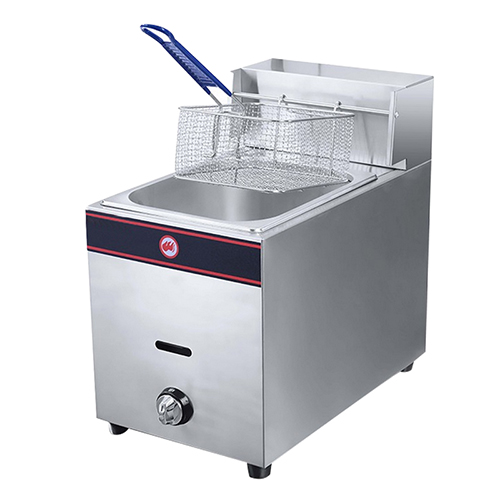
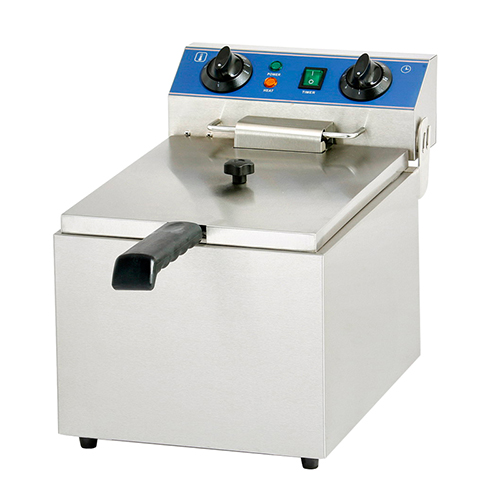
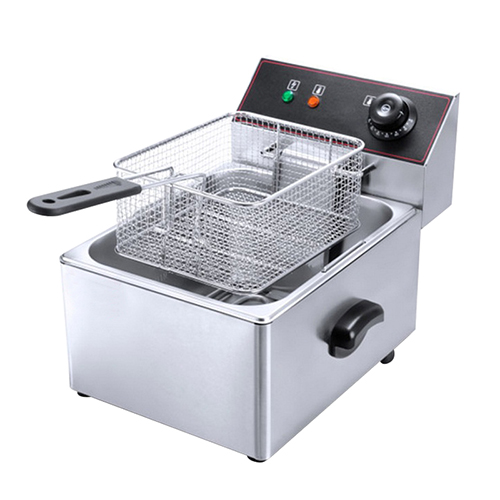
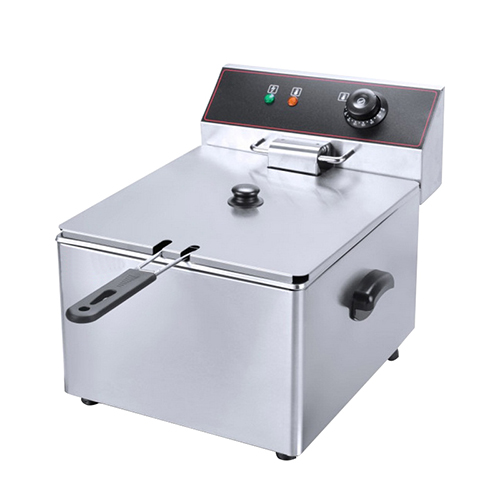
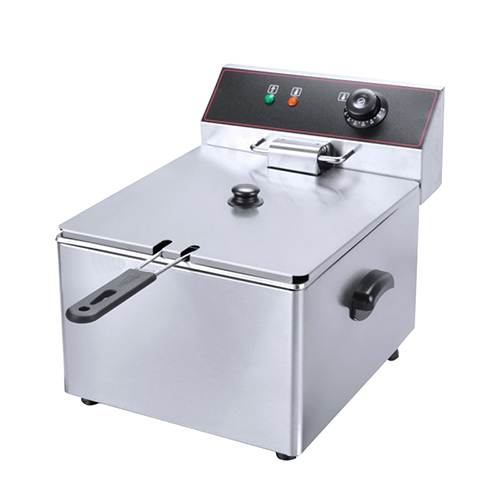
Commercial Electric Deep Fryer by SYBO comes in five countertop tank sizes, 4L to 12L, so a snack counter or takeaway can match the machine to its busiest hour instead of over-buying. The Ningbo manufacturer quotes voltage, nameplate and packaging to order.
Send Inquiry
Product Description
Most first machine purchases go wrong in the same way. The tank is chosen from a sheet of numbers that looks adequate, and the mismatch only shows up in the second week, when the evening queue is longer than the tank can hold at temperature. SYBO, a Ningbo manufacturer that has supplied commercial food machinery to export buyers for more than 25 years, builds the Commercial Electric Deep Fryer as a range rather than a single model: five countertop tanks from 4L to 12L sharing one element and one control design, so what changes between them is volume, not quality.
- Five tanks, 4L to 12L
- 2.0 - 3.25 kW heating
- Single-phase 220-240V
- Dial thermostat
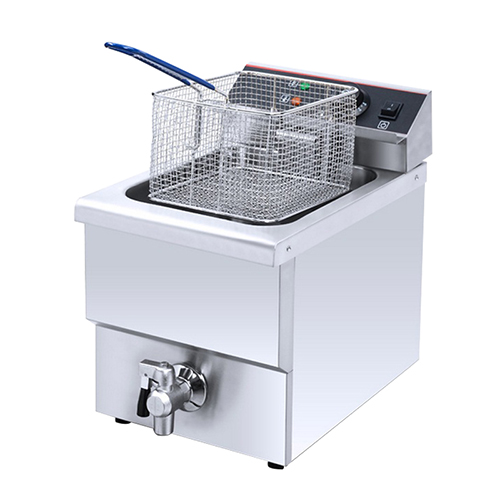
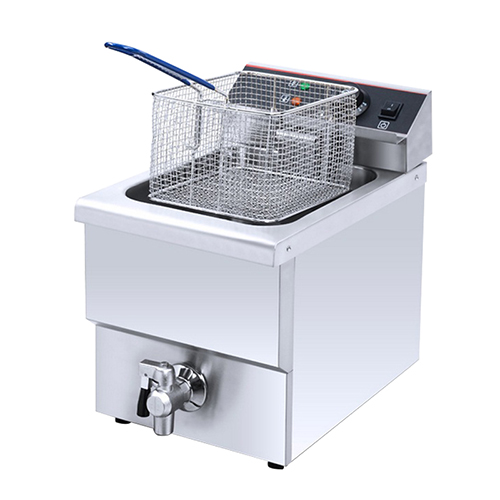
- Drain valve standard
Right Size First
Sizing a frying station is an hour of arithmetic, and it saves a year of regret. The figure to work from is not how much the kitchen sells in a day, but how much it sells in the one hour that hurts.
- Count the busiest hour. Write down how many baskets leave the station between seven and nine in the evening, and what goes into them. That single number decides the tank far more reliably than a daily average.
- Allow for the drop, not just the load. A basket of frozen product pulls the oil down the moment it goes in, and the tank that has more oil above and below the basket absorbs that drop and climbs back before the next order.
- Check the supply before the size. Every model here runs on single-phase 220-240V, but a counter already sharing one socket needs that load checked before the largest tank is ordered.
Pick by Counter Type
| Counter type | Tank that fits | Why it works |
|---|---|---|
| Snack or drinks counter, one item fried to order | 4L or 6L | Lifts onto the worktop, runs from one single-phase socket, and holds temperature across spaced orders. |
| Takeaway running fries, chicken and pastries on one station | 8L or 11L | A fuller tank recovers faster after each basket, so the next order does not go out pale. |
| Canteen or convenience store with set service times | 6L or 8L | Repeatable output matters more than peak volume, and one dial setting covers the week. |
| Breakfast trade built on continuous batches | 11L or 12L | The larger oil volume holds its temperature through back-to-back frying rather than sagging halfway. |
Worked through in that order, the answer is usually a smaller tank than the buyer first had in mind, and a station that keeps pace rather than one that merely looks impressive on paper. Choosing a Commercial Electric Deep Fryer is a sizing exercise before it is a purchasing one, and it is worth doing once with real numbers.
Small-Kitchen Fit
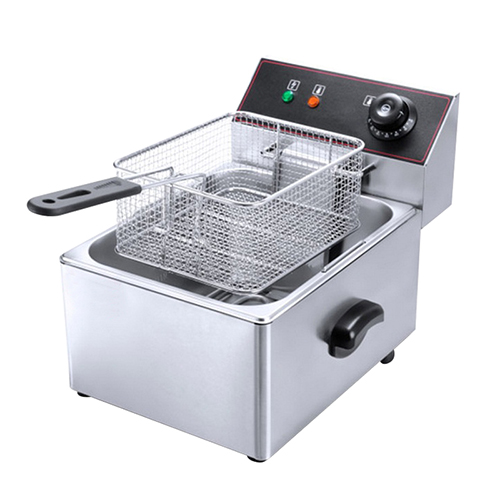
What suits a small counter here is not the price tag but the fact that the machine stops at the worktop and asks nothing of the building behind it.
- One metre of bench and one socket. Nothing is built in, no floor space is committed, and the unit can be slid forward for cleaning without calling anyone.
- Heat where the food actually is. The element sits below the basket and the thermostat cycles it, so the oil across the tank stays even instead of leaving a hot corner that browns one side of a basket.
- A cold zone beneath the element, where crumbs settle away from the heat rather than resting against it and turning the oil dark by the end of the week.
Those three details are the reason a smaller building can run a real frying station rather than a compromise. A Commercial Electric Deep Fryer earns its place in a small kitchen by being easy to live with every day, not by winning a comparison table once.
Specifications
Five countertop models cover the range, all built on the same tank, element and control design. Read as a table, the only thing that changes is how much oil sits under heat.
Model Range
| Model | Power | Voltage | Capacity | Dimensions (L x W x H) | N.W. |
|---|---|---|---|---|---|
| HEF-4L | 2.0 kW | 220-240V | 4 L | 265 x 385 x 320 mm | 5.0 kg |
| HEF-6L | 2.5 kW | 220-240V | 6 L | 310 x 410 x 290 mm | 5.6 kg |
| HEF-8L | 2.8 kW | 220-240V | 8 L | 310 x 410 x 340 mm | 6.2 kg |
| HEF-11L | 3.2 kW | 220-240V | 11 L | 370 x 440 x 340 mm | 11.4 kg |
| HEF-12L | 3.25 kW | 220-240V | 12 L | 290 x 240 x 410 mm | 9.8 kg |
Built to order, not taken from stock
The table above describes the standard single-phase build. Orders for 110V markets, non-standard plug types, customer rating plates and retail carton artwork are quoted separately, and the element and wiring are then specified once at the order stage rather than corrected after the units are boxed.
Read honestly, the table answers one question: how much oil should the kitchen hold at temperature. The controls, the cut-outs and the tank build are identical across all five, so a snack counter and a busy takeaway are choosing the same machine at two different volumes. Choosing a Commercial Electric Deep Fryer is choosing a number of litres, not a specification tier.
Branding & OEM
For an importer, a chain or a kitchenware distributor, the machine a customer unwraps is the machine that carries their name - and that starts well before production, not at the packing line.
- Rating plate and nameplate wording produced to the wording you supply, in the language of the destination market, so the unit can go straight to a customer or a retail listing.
- Retail carton and artwork, so goods can move through a distributor's channel instead of being repacked at the warehouse before they are sold on.
- Voltage, plug type and cable matched to the market, with 220-240V as standard and 110V builds made to order against the destination country.
Specified together before production, these details are the practical difference between buying from the people who build the machine and buying from a trading desk. They are also the reason a Commercial Electric Deep Fryer arrives ready for the market it was sold into rather than nearly ready.
Care & Longevity
A frying station only performs as well as the routine around it, and most of that routine here is built into the design rather than left to memory.
- Drain and filter at the end of service, so sediment leaves the tank instead of carbonising overnight and tainting the first batch of the next day.
- Wash the removable basket and the non-stick inner tank in warm water, then dry both fully before the tank is refilled.
- Wipe the stainless exterior with a soft cloth only. Abrasive pads leave scratches, and scratches give oil and residue somewhere to collect.
Two habits extend the working life of the unit further than any feature on this page: never switch the element on with an empty tank, and replace the oil on a schedule rather than by its smell. The dry-boil cut-out is there to protect the element if the first happens by accident, not to make it a routine. A Commercial Electric Deep Fryer holds its output best when it is specified together with its cleaning routine rather than instead of one.
FAQ
QHow do I know which of the five tanks to order?
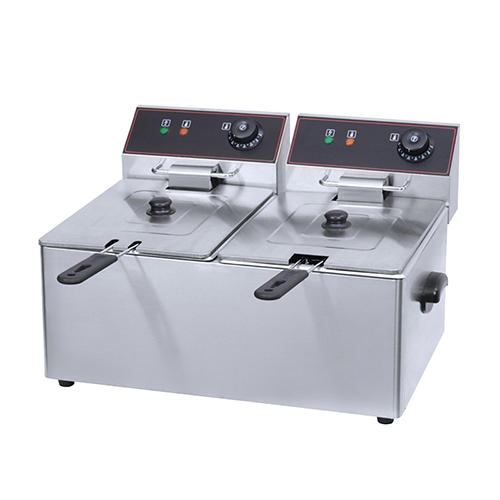
AStart from the busiest hour rather than the day. Count the baskets that hour produces and what goes into them. A short menu fried to order works from a 4L or 6L tank, which holds temperature between spaced orders. Where several breaded items pass through one station, step up to 8L or larger, because a fuller tank recovers faster and the next basket does not go out pale. Two smaller tanks are a valid answer where flavours must not mix, and we will quote both routes on the same enquiry.
QCan it be supplied for a 110V market?
AYes. The five models ship as standard on single-phase 220-240V, and the same machines are built for 110V markets with the plug type, cable and rating plate matched to the destination country. Tell us the destination at the enquiry stage so the electrical build is specified once rather than reworked after the units have been boxed.
QDoes a countertop unit need its own circuit?
AIt should have one. The draw ranges from 2.0 kW on the smallest tank to 3.25 kW on the largest, which is a working load rather than a plug-in accessory. Treat the machine as fixed equipment, give it a dedicated circuit sized by a qualified electrician against the rating plate, and keep kettles and mixers off the same supply.
QWhat happens if the tank is switched on with no oil in it?
AThe dry-boil cut-out removes power from the element before it can be damaged, and an overheat sensor does the same if the oil climbs past its set point. Both reset once the machine has cooled and the tank is filled back to the marked level. Treat them as a safeguard rather than a habit - the oil level should still be checked before the element is switched on.
QCan the machine carry our own brand?
AYes. Rating plate wording, retail carton and artwork are produced to the details you supply, and voltage, plug type and cable are matched to the destination market. Send the wording and the artwork specification with the enquiry, and the units are built to it from the start rather than relabelled afterwards.
QHow long should the cooking oil last?
AIt depends on what passes through it. Heavily breaded and battered items shed far more debris than plain potatoes, so a breaded-chicken menu needs fresh oil sooner than a shop that only fries chips. Daily skimming, filtering through the drain valve and a full change on a calendar rather than on smell is what keeps oil life predictable and keeps the taste of the food clean.
QCan I order a single unit to evaluate before a container?
AYes. Single units are supplied for evaluation, and container quantities are priced on a quantity basis. Because the controls and the tank build are common across the five models, a trial of one size tells you most of what you need to know about the rest of the range.
Hot Tags: Commercial Electric Deep Fryer
Related Category
Commercial Griddle
Commercial Hot Dog Grill
Commercial Rotisserie Oven
Shawarma Broiler
Commercial Fryer
Send Inquiry
Please Feel free to give your inquiry in the form below. We will reply you in 24 hours.